

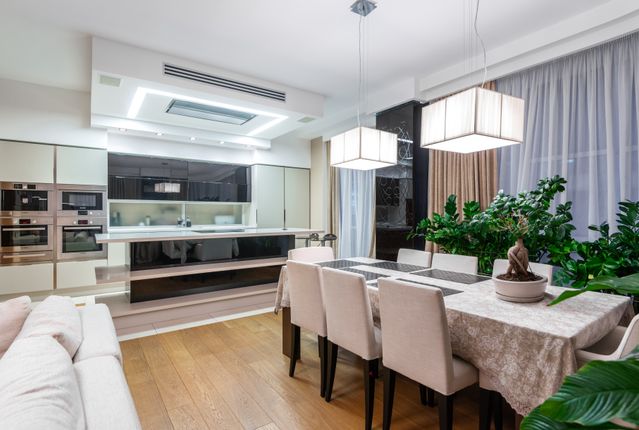
Property buyers in Oz are increasingly looking at comfort, energy efficiency, and year-round climate control when picking out a new home. Energy prices are still pretty high and we’re seeing more extreme weather events so heating and cooling systems are no longer just an optional fancy upgrade in a lot of places. Ducted heating and cooling systems especially the reverse-cycle kind are pretty closely linked with luxury homes and modern living standards. But the relationship between ducted climate control and house value is a bit more complicated than the sales spin usually lets on.
The Growing Financial Premium for Energy-Efficient Homes
Some recent Aussie property research shows that energy efficiency is now a real driver of house prices. Domains Sustainability in Property Report 2025 found that houses that are energy efficient sell for an average premium of $118,000 nationally which is a 14.5% increase over houses that don’t have the same efficiency features. In Melbourne that premium is up to $197,000, in Sydney its $180,000. All of this shows that buyers are increasingly linking good energy efficiency with higher house value.
As part of this trend, climate control is playing a pretty significant part because heating and cooling make up a big chunk of household energy bills. Homes with modern systems like ducted heating and cooling Melbourne are often sold alongside other efficiency upgrades making them more attractive in a competitive market. The problem is figuring out how much of the value boost can actually be put down to the ducted system itself, rather than just the quality of the house as a whole.
The Attitudes of Buyers Have Changed Dramatically
In the last 10 years consumer expectations in terms of climate control have dramatically changed. Australian households had almost doubled the number of energy-efficient features advertised on more than half of all homes sold in 2025, versus comparatively low rates five years before. The change is driven by the evolution of buyer priorities, specifically families looking for reduced energy expenses in the long run as well as improved thermal comfort.
In many cities, the market has indicated that the need for climate control is now firmly becoming the standard model choice. If a property does not have all of the heating and cooling systems sorted, this could cause it to be at a competitive disadvantage, particularly in places that get warmer summers and colder winters. While in many cases ducted systems do not generate a value premium, in practice, they can avoid the value erosion that would occur if a building did not meet today’s expectations when it comes to ventilation. This typically translates into additional revenue from increased customer demand, shortened selling time, and increased qualified customers.
Budget to Value: ROI Analysis
Installation costs are a key factor in the economic calculations of ducted heating and cooling. The industry estimates the average cost of installing a ducted reverse cycle system at AUD 13,500 to AUD 16,000, with larger homes likely to be AUD 20,000 or higher. This is a significant amount of money that homeowners are expected to pay.
But when it comes to the money value of a property, the showdowns seldom amount to a straight dollar-on-dollar return. Integrated climate-control systems are often noticed by real estate professionals, but they may not add the same value to a property as they add to its perceived value. A well-insulated home may have more inspections and make it more desirable to prospective purchasers. The value contribution is therefore often improved marketability, not necessarily corresponding with the actual value added determined by the amount of money invested in the installation. This distinction is important because not all properties will see 100% return on their installation expenses only from resale value.
Regional Market Differences Influence Outcomes
The effects of the ducted heating and cooling system differ significantly from each Australian market. Whole-home climate control can be appealing to purchasers in cities that experience a wide range of temperatures throughout the year, like Melbourne, Canberra or Adelaide. Others, however, in coastal or temperate areas might give less importance to the comprehensive systems.
Local housing inventory has an effect on value that is also regionally relevant. Over 70% of Australian houses were built prior to 2003, when the energy-efficiency requirements became tougher. Older properties tend to be under-insulated and lack insulation. In such instances a modern ducted system could make a significant difference in comfort and buyer expectations. However, for newer dwellings that have a more efficient overall rating, ducted climate control might be considered as a part of a package of efficiency elements instead of a stand-out value driver.