
Most people who reach a hip arthroscopy consultation have been managing their symptoms for longer than they expected. The path from first hip or groin pain to a surgical recommendation is rarely short, and understanding what each stage of that journey involves makes a real difference to how patients navigate it.
How Patients Typically Arrive at This Point?
Pain in the hip and groin region that does not improve with rest, physiotherapy and anti-inflammatory medications is what typically triggers a referral to the orthopaedic surgeon. The common conditions that are amenable to hip arthroscopy surgery Melbourne include FAI, labral tear and synovitis. These are structural deformities and conservative treatment may help in managing the condition but will not be able to correct it. It may take months of symptoms before the radiographic examination pinpoints the structural abnormality because sometimes the structures cannot be evaluated through simple X-ray imaging while at other times the symptoms may mimic those of a muscular injury.
GP referrals allow for further testing procedures to be carried out. Functional tests like the impingement test and joint stability test are performed while the range of motion test provides information about the condition. Weight-bearing X-rays show bony morphology and joint spaces while MRI, and arthrogram in some cases, gives the information of the labrum and cartilage that cannot be provided by X-ray.
The Day of Surgery
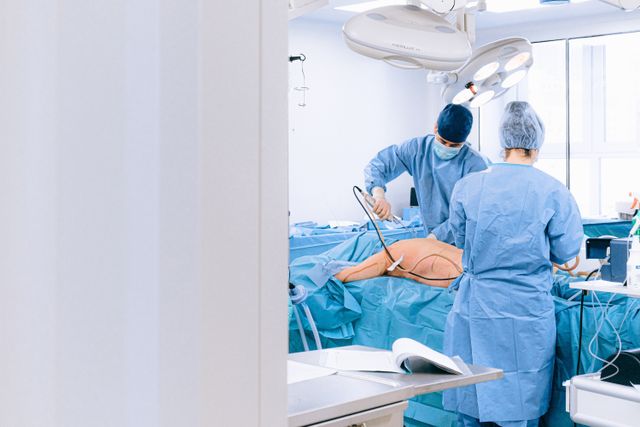
Hip arthroscopy is usually done as either a day procedure or with just one night in hospital. You’ll be admitted on the day of the surgery and will get ready by fasting, having an anaesthetic check-up, and then being put onto one of those special traction devices that keeps your hip steady while they do the procedure.
The arthroscope pokes in through a tiny cut and then the surgeon has a good look around the joint before actually starting on the treatment plan. Now, what they see once they’re inside can sometimes be a bit different from what the scans had already shown. You can’t really get a proper picture of how bad or good the tissue is, or where a labral tear is, until the surgeon is actually in there looking at it. Then they make their decisions on the fly, based on what they actually see.
The Nitty Gritty of the Procedure
When there’s a bony overgrowth on the femoral neck or on the rim of the acetabulum because of FAI, the surgeon carefully trims back the bone so that the hip moves normally again. If a labral tear is the problem, they need to decide whether to sew it up with suture anchors or just to clear out the damaged bits of tissue. Sometimes loose bits are floating around inside the joint and need to be taken out. All of this is done through tiny incisions, with the surgeon working from the camera feed on the monitor.
The First Two Weeks
After surgery, crutches are pretty standard but just how long you need them will depend on what was done. Repairing a labral tear needs a bit more time before you can put your weight on it properly, because the repaired tissue needs to get strong enough to cope. Post-op pain is usually pretty manageable, and it’s all about using oral painkillers, icing and elevating the leg when you’re not moving around. Physiotherapy starts straight away, focusing on keeping the joint moving and getting rid of any swelling.
The first two weeks; that’s not when things start feeling really good again. That’s the bit where your body is reacting to the surgery, and that’s just part of the process. So don’t think that just because you don’t feel great straight away, it’s not working.
Weeks Three to Twelve and Beyond
As the swelling starts to clear up, physio starts to focus more on strengthening the muscles around the hip; the abductors, flexors, and external rotators. Patients with straightforward procedures start to be able to walk without crutches as the strength comes back, but the timeline is different for each person. Cycling and swimming are usually okay to get back to long before higher impact stuff like running or playing sport.
We know from AIHW data that around 7.3 million Australians are struggling with long-term musculoskeletal problems. It’s a massive joint health issue in this country. Of course, how quickly you recover from hip arthroscopy depends on the procedure you had, your overall health and just how hard you work with your physio. It’s not uncommon for improvement to keep going even after six months, as it takes time for the nerves and muscles to adapt to what’s been done.
What Shapes the Outcome?
Hip arthroscopy offers good outcomes when it comes to pain relief and functional gains for patients with appropriate selection and definite structural pathology. It neither regenerates cartilage nor reverses osteoarthritis that already exists; patients with substantial loss of cartilage will not have as much success as those with preserved cartilage and structural problems only. Research is ongoing on whether hip arthroscopy affects the natural history of the development of osteoarthritis; at this stage, the data available is not yet conclusive. The one thing that is certain is that structured rehabilitation becomes the key factor after the surgery is performed.